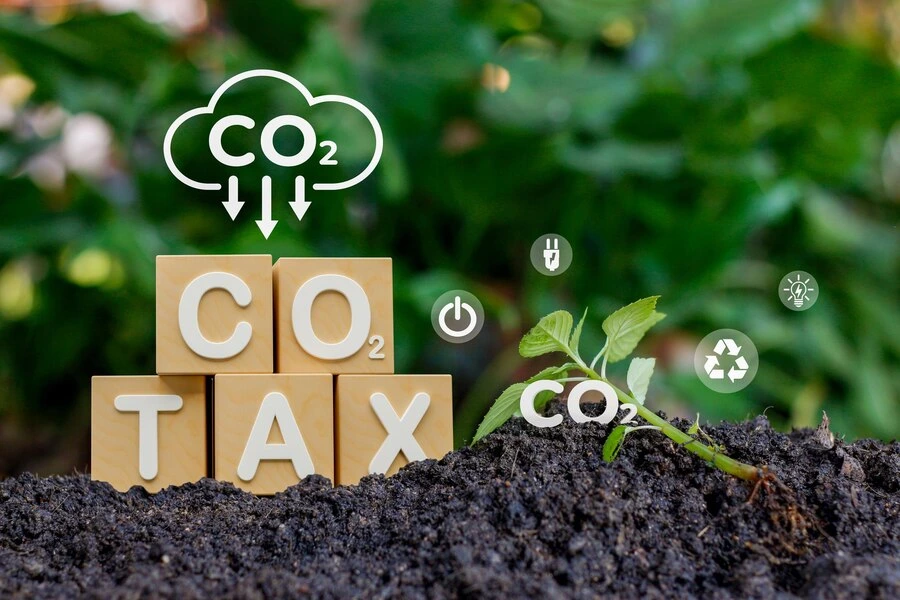
The Indonesian government is increasingly committed to achieving a transition toward a green economy through the development of sustainability-oriented policies. One such instrument is the carbon tax, a levy imposed on greenhouse gas (GHG) emissions generated by economic activities. The carbon tax is regulated under Law No. 7 of 2021 on the Harmonization of Tax Regulations (HPP Law). This policy aims to reduce emissions by encouraging a shift toward renewable energy and supporting Indonesia’s commitment to achieving Net Zero Emissions (NZE) by 2060 or earlier.
In line with the evolving national climate policy architecture, carbon tax implementation is now situated within Indonesia’s broader Carbon Economic Value (Nilai Ekonomi Karbon/NEK) framework, as governed by Presidential Regulation No. 110 of 2025 (Perpres 110/2025). Under this framework, carbon tax functions alongside other market-based instruments such as emissions trading, carbon offsets, and result-based payments, forming an integrated approach to emissions control.
Carbon Tax Regulations in Indonesia
The legal basis for the implementation of the carbon tax is set out in Article 13 of the HPP Law, which mandates the government to impose taxes on carbon emissions. These provisions are further elaborated through Government Regulation (GR) No. 40 of 2025 on Carbon Tax, which establishes the following core principles for implementation:
- Tax Object: Activities that generate carbon emissions from fossil fuel combustion and certain industrial processes.
- Tax Subject: Corporations or individuals conducting such activities.
- Initial Tax Rate: A minimum of IDR 30 per kilogram of CO₂e, as stipulated under the HPP Law, with gradual adjustments aligned with the readiness of the national carbon market.
- Calculation Mechanism: Based on actual measured emissions, verified through an emissions monitoring and reporting system.
Consistent with Perpres 110/2025, carbon tax application is designed to be interoperable with emissions trading mechanisms, particularly in sectors subject to emissions caps. This allows carbon tax to serve as a complementary compliance tool, especially for emissions that exceed allocated allowances. The government is currently preparing the derivative Minister of Finance Regulations (PMK) for priority sectors, such as energy and industry, to ensure that carbon tax implementation is carried out gradually and in a measurable manner.
Challenges in Carbon Tax Implementation
Despite a strong legal foundation, the implementation of the carbon tax is not without challenges. As reported by Tempo.co, the Directorate General of Budget at the Ministry of Finance stated that the carbon tax has not yet become a primary priority in the Draft State Budget (RAPBN) 2026, as the government remains focused on developing supporting infrastructure and harmonizing cross-sector regulations (Monday, 15 December 2025). The key challenges currently faced include:
- Readiness of Industry and the Energy Sector
Many businesses remain concerned about additional cost burdens that could affect competitiveness, particularly in energy-intensive sectors such as manufacturing and mining. - Availability of Data and Emissions Measurement Systems
Effective carbon tax implementation requires accurate emissions data, while many companies have yet to adopt standardized Monitoring, Reporting, and Verification (MRV) systems. - Inter-agency Coordination and Public Outreach
Carbon tax regulation involves multiple ministries such as the Ministry of Finance, the Ministry of Environment and Forestry, and the Ministry of Energy and Mineral Resources making coordination a significant challenge.
Solutions and On-the-Ground Realities
The government is currently adopting a phased approach to carbon tax implementation. The initial stage involves pilot projects in coal-fired power plants (PLTU), where emissions are calculated and compensated through a cap-and-tax mechanism. This initiative serves as an entry point for the development of Indonesia’s national carbon market, which is now facilitated by the Indonesian Carbon Exchange (IDXCarbon). Under the national NEK framework, IDXCarbon plays a strategic role in supporting both compliance and voluntary markets, with potential future linkages to fiscal instruments such as carbon tax, subject to implementing regulations.
Beyond government policy, support from the private sector and non-governmental institutions is essential. Cross-sector collaboration can accelerate the adoption of low-emission technologies and enhance carbon data transparency. With increasingly mature regulations, Indonesia is reinforcing its commitment to addressing the climate crisis while simultaneously unlocking green investment opportunities.
Learn more about how your industry can adapt to green policies, calculate industrial carbon emissions, and contribute to emissions reduction at greenwise.co.id.