Jakarta, 30 January 2026 — The energy transition in the industrial sector requires accurate measurement, energy efficiency, and emissions reduction; without these, such efforts risk remaining mere claims. To address this challenge, Greenwise Consulting, in collaboration with GIZ Indonesia through the Sustainable Energy Transition in Indonesia (SETI) program, officially concluded the SETI Lab Industrial Capacity Development Batch 1 with a specialized training on Measurement & Verification (M&V).
This fourth SETI Series training was organized through a multi-stakeholder collaboration involving CERAH, World Resources Institute (WRI) Indonesia, and GFA Consulting, with the support of the Ministry of Energy and Mineral Resources. The event was held on Friday, 30 January 2026, at DoubleTree by Hilton Cikini, Jakarta, and was attended by more than 70 participants representing 40 invited target companies across seven industrial sectors they are cement; iron and steel; textile, apparel, and footwear; chemicals and petrochemicals; automotive and manufacturing; food and beverage; and pulp and paper as well as representatives from two ministries, the Ministry of Energy and Mineral Resources and the Ministry of Industry.
The event was officially opened by Endra Dedy Tamtama, S.T., Coordinator for Energy Conservation Supervision, Directorate General of New and Renewable Energy and Energy Conservation (EBTKE), Ministry of Energy and Mineral Resources. In his remarks, he emphasized the critical role of Measurement & Verification as a foundation for implementing energy transition policies in the industrial sector. According to him, without credible measurement and verification, industries cannot truly assess the effectiveness of their energy efficiency investments.
Echoing this perspective, Dr. rer. nat. Johannes Anhorn, Project Coordinator of SETI – GIZ Indonesia, stated that the training was designed to ensure participants not only understand the concepts, but are also able to translate and implement M&V as a practical tool to support decarbonization efforts within their respective industrial facilities.
Measurement & Verification Practices in Industry
The training was facilitated by Hesli Oktavia, S.T., M.Sc., CSRS, CSRA, and featured two trainers. Antonio Pelaez opened the session with the topic “Introduction to Measurement & Verification: Urgency, Benefits, and Linkages to Energy Transition”, highlighting the strategic role of M&V as a bridge between energy transition targets and operational realities in industry.
Antonio Pelaez Ortega from GFA Consulting Group Germany, an expert in energy Measurement and Verification (M&V), opened the session with the topic “Introduction to Measurement & Verification: Urgency, Benefits, and Linkages to Energy Transition.” The session highlighted the strategic role of M&V as a bridge between energy transition targets and operational realities in industry, while also providing an overview of how M&V frameworks are applied at the international level, the key challenges encountered, and selected implementation case studies from various European countries.
Meanwhile, Ir. Titovianto Widyantoro, M.Si. delivered the session “Overview of M&V Standards: ISO 50015 and Practical Application in Industry”, discussing how international M&V standards can be realistically applied in industrial contexts while supporting energy management systems and data-driven decision-making.
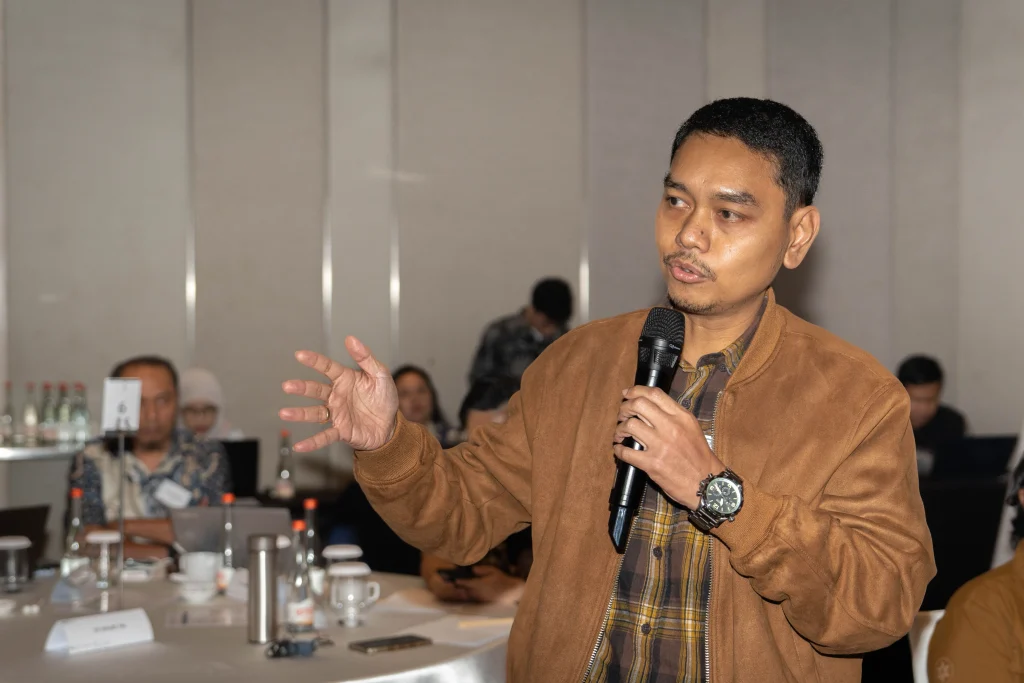
During the question-and-answer sessions, participants actively raised practical issues from their respective industrial operations. Fernandus from PT Indofood questioned how practitioners should adjust baselines or monitoring methods when static conditions change during technology implementation, as well as how companies should decide between technical efficiency and higher operational costs when gas-fired boilers perform better than coal-fired units.
Meanwhile, Randy from PT Indah Kiat Pulp & Paper Karawang highlighted challenges related to data reliability, including flow meter drift, calibration inconsistencies, and the need for third-party verification, and asked how industries can clearly demonstrate the correlation between post-audit improvements and actual energy performance results. These discussions reinforced the importance of clearly defined scope and boundaries, reliable measurement instruments, and contextual application of Measurement & Verification methodologies in industrial settings.
Worksheets and Group Work Session
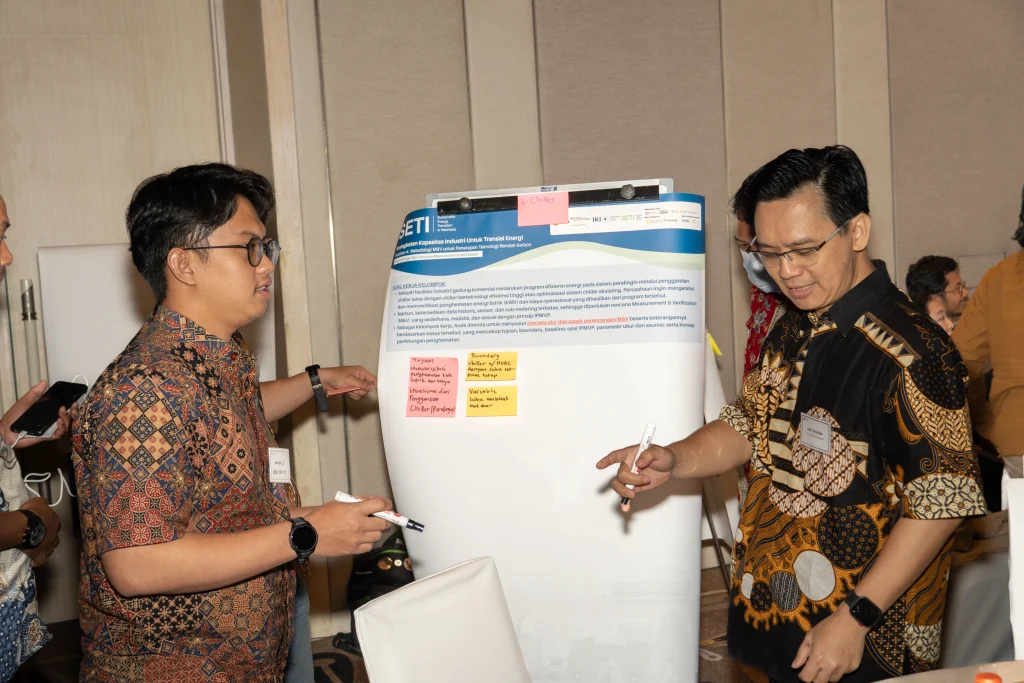
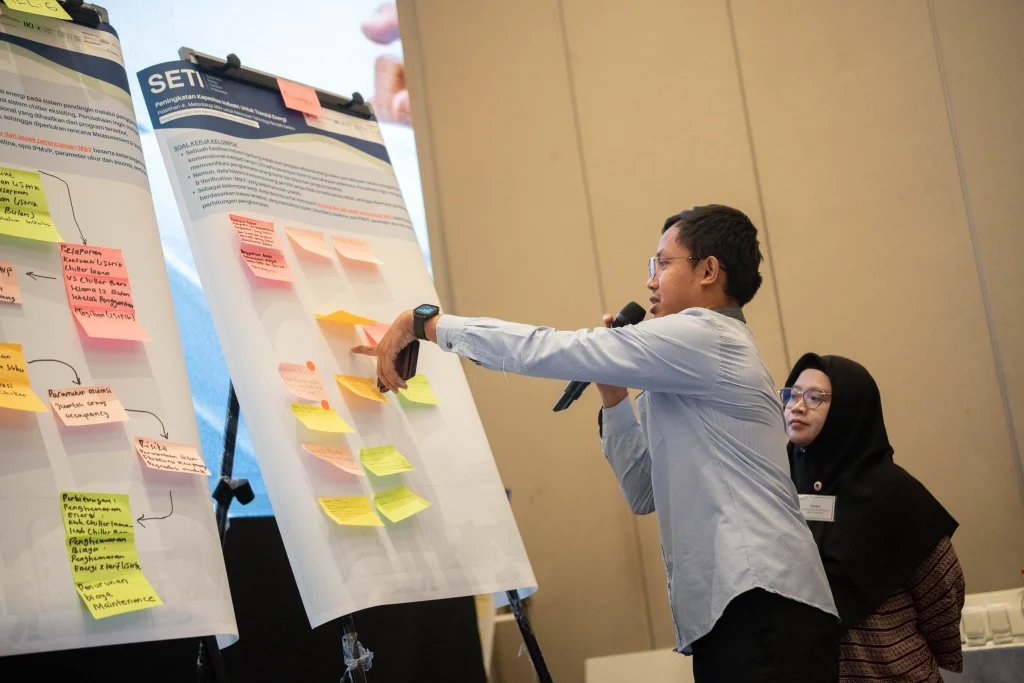
Beyond theoretical presentations, the training was designed to be highly interactive through worksheet exercises followed by a Group Work Session: “Development of a Mini M&V Plan Based on Selected Technology.” Participants were divided into small groups of approximately eight people to develop a Mini M&V Plan based on selected low-carbon technologies.
Through this session, participants directly practiced defining scope and boundaries, determining baselines, selecting appropriate M&V methods, and designing measurement and verification approaches. The group outputs were then presented and jointly discussed, enriching cross-sectoral learning among industrial participants.
This approach reinforced the understanding that M&V is not merely a reporting obligation, but a strategic tool to ensure that energy efficiency measures and low-carbon technology investments deliver tangible impacts.
Participant Reflections: More Than Just a Training
Participant enthusiasm was evident during the reflection session. Yoviza from PT Pindo Deli shared that although this was her first opportunity to attend the training onsite in the fourth series, the materials delivered were highly relevant and practical. She noted that the group discussions and hands-on sessions provided a much deeper learning experience compared to previous online training sessions.
These reflections demonstrate that the combination of presentations, worksheets, and group work effectively helped participants recognize M&V as a crucial component of industrial energy efficiency and decarbonization strategies.
Conclusion of SETI Batch 1 and the Way Forward
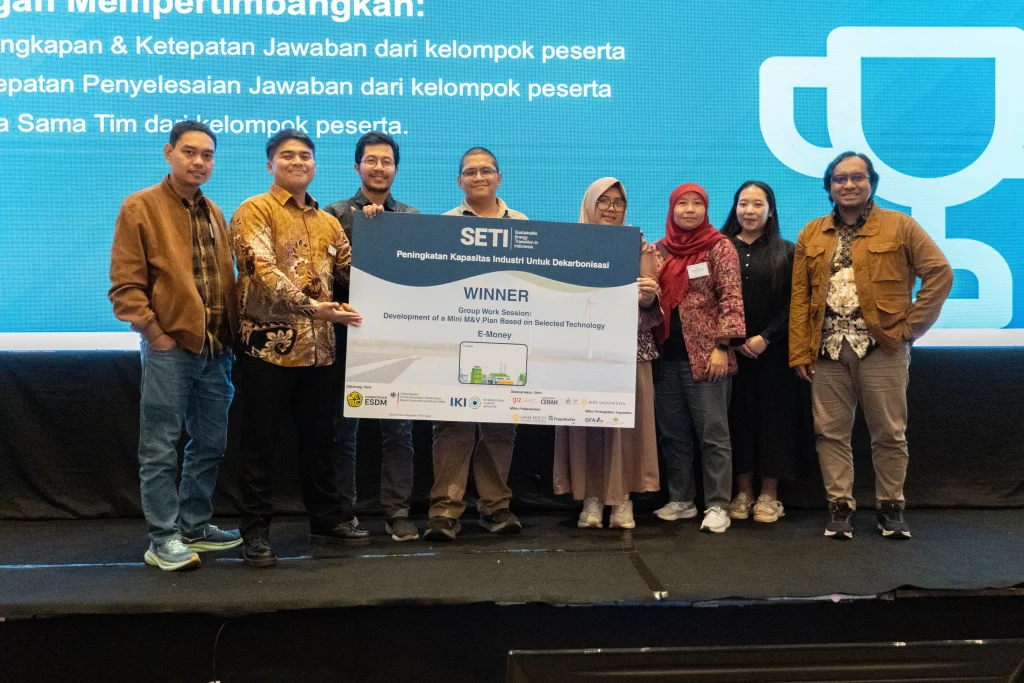
The fourth series training marked the conclusion of the SETI Lab Industrial Capacity Development Batch 1, which previously covered topics including energy transition strategies, technology exploration, investment models, and Measurement & Verification methodologies. This series was designed to build sustained understanding among industrial stakeholders in addressing the challenges of transitioning toward a low-carbon economy.
Through collaboration with GIZ, CERAH, GFA, WRI, and the Ministry of Energy and Mineral Resources, Greenwise Consulting reaffirmed its commitment to continue supporting Indonesian industries through advanced training programs, technical assistance, and data-driven solutions.
👉 Further information on Greenwise programs and initiatives can be accessed at www.greenwise.co.id